Divided Kingdom & Exile
Israel splits into north and south, then both fall to the great empires, Assyria takes the north, Babylon destroys Jerusalem and the temple. The prophets call a people to account as the world's superpowers close in. Seventy years of exile begin.
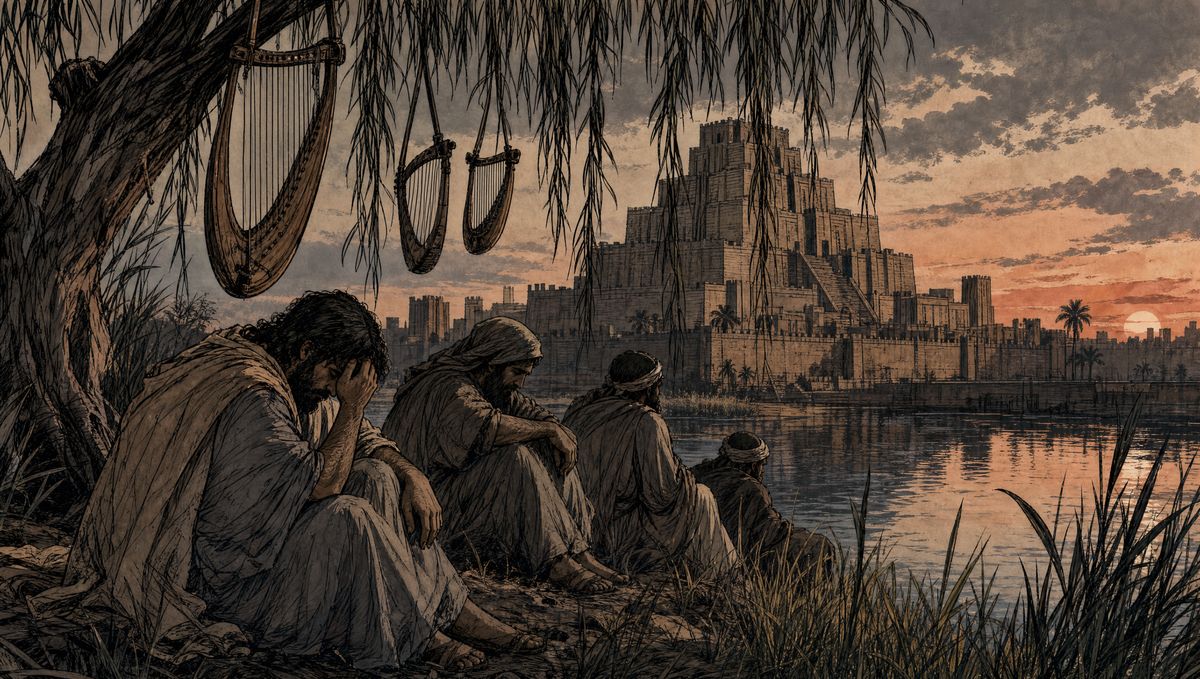
Assyria was the first true empire of the age, brutal, bureaucratic, expert at siege warfare and mass deportation. Babylon (under Nebuchadnezzar) inherited its power and destroyed Jerusalem in 586 BCE, deporting the elite to Babylon. Across the river, Egypt still meddled but was fading.
The region sits between two rival superpowers: Assyria (northeast) and Egypt (southwest). The northern kingdom of Israel was rich and exposed; the southern kingdom of Judah was smaller, poorer, but protected by desert and the hill country. The Assyrian and Babylonian armies marched through like clockwork.
Assyria's policy of mass deportation scattered conquered peoples to break their identity, Israel's 'ten lost tribes' were its victims. In Judah, wealthy elites and corrupt courts grew fat while the poor were crushed; the prophets (Isaiah, Jeremiah, Amos, Micah) raged against this injustice.
Economies were organized for war and tribute. Conquered peoples paid crushing tribute in grain, gold, and labor. In exile in Babylon, the deportees were settled communities who 'planted vineyards and built houses' (Jer 29), allowed to live and work, but never to return home freely.
Assyria perfected siege warfare: battering rams, siege towers, and massed archery behind shields. Babylon's army inherited these. The Assyrian king Sennacherib boasts (in his own annals) of besieging Jerusalem. The 'mighty men of valor' and chariot armies of the era were the standing forces of great kings.
- The prophets warn Israel and Judah (Isaiah, Jeremiah, Amos, Hosea, Micah)
- Assyria destroys Samaria and the northern kingdom (722 BCE)
- Babylon destroys Jerusalem and the temple (586 BCE)
- Daniel and Ezekiel live through the exile in Babylon
Empires rise and fall, and power is borrowed. The prophets' call for justice and their refusal to flatter the powerful remain a needed voice in any age.