The United Kingdom
Saul, David, and Solomon build a united Israelite kingdom, the first real Israelite state, with a capital at Jerusalem and a temple. The high point of Israel's power, wedged between the fading old powers and the rising new ones.
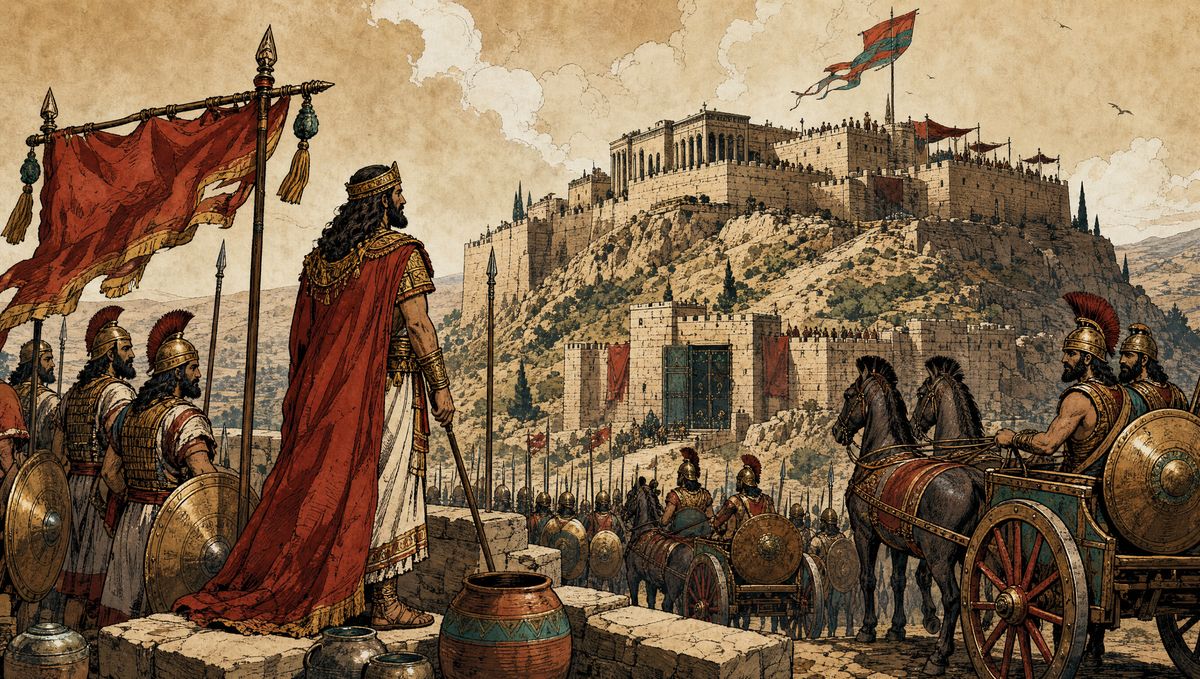
Saul, the people's warrior-king; David, who united the tribes, took Jerusalem, and crushed the Philistines; Solomon, who built the temple and forged alliances (including a marriage to Pharaoh's daughter). The kingdom was one of the smaller states of the era, but the richest per capita along the trade corridor.
Israel now controlled the central hill country and extended its reach to the coast and north. Jerusalem, a small hill-town, was made the political and religious capital. Solomon's kingdom taxed the trade routes between Egypt and Mesopotamia, growing rich on the traffic passing through.
Israel became more urban and centralized. A royal court, scribes, officials, and a standing army replaced tribal rule. But the gap between wealthy elites and rural farmers widened, the social abuse the prophets (Amos, Micah) would denounce a generation later.
A booming economy built on taxation, tribute from vassal states, and control of the trade routes. Solomon's building projects (the temple, the palace, store-cities, chariot cities) required forced labor and heavy taxes, resentment that would split the kingdom after his death.
Iron was now common. Israel built its own chariot corps and garrison cities. David's army was a professional core of loyal warriors (his 'mighty men') around a militia. The era's great innovation was the organized siege and the walled fortress-city.
- David slays Goliath and rises to the throne (1 Sam 17-2 Sam)
- Solomon builds the temple (1 Kgs 6-8)
- The visit of the Queen of Sheba (1 Kgs 10)
- The kingdom splits after Solomon's death (1 Kgs 12)
The warning that prosperity and centralization can corrupt, and that the health of a nation shows in how it treats the poor, the exact thing the prophets would condemn.