The Persian Return
Cyrus of Persia conquers Babylon and lets the exiles go home. Jerusalem is rebuilt, the temple restored, and the Torah re-established. The world's first great tolerant empire returns a people to their land, a turning point in Jewish history.
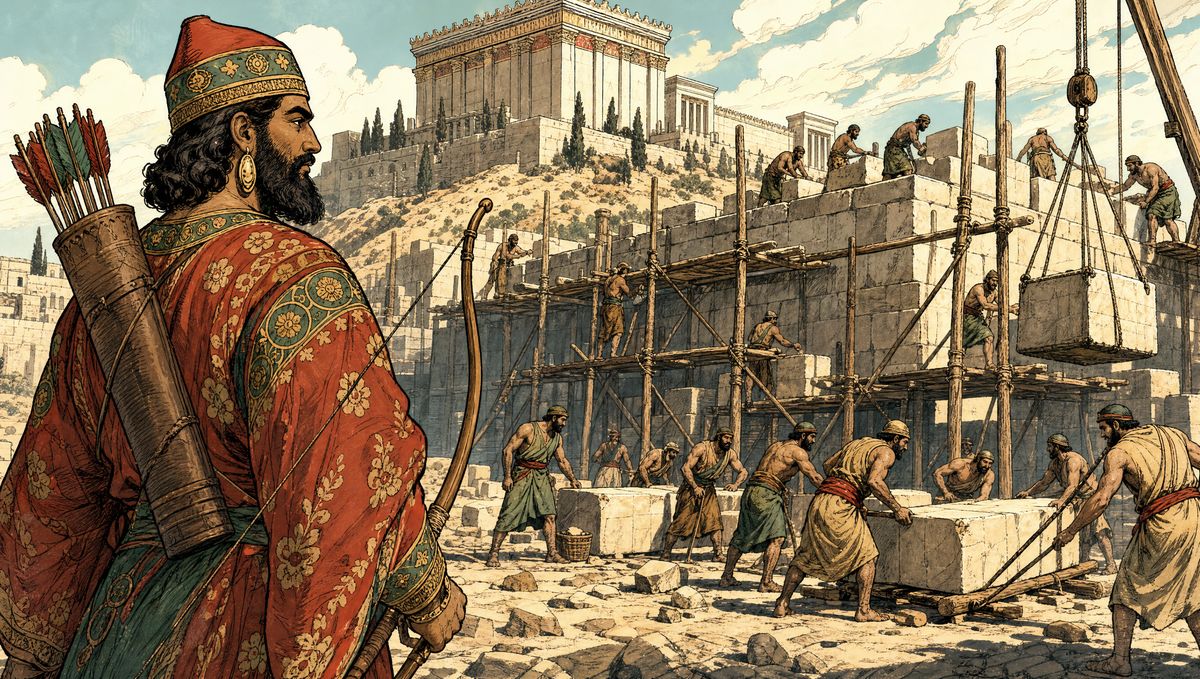
Cyrus the Great's policy of repatriation (returning deported peoples and rebuilding their temples) was a deliberate strategy to win loyalty. Persian kings (Darius, Artaxerxes) ruled through satraps and local governors. Ezra was a scribe-scholar sent with royal authority to re-establish the Law.
The Persian Empire was vast, from the Aegean to India, united by a system of royal roads and relay messengers. Judah became a small, poor province called Yehud within the empire, taxed by Persia but allowed to govern its own religious life and rebuild its temple.
The returnees found a mixed population, those left behind, plus foreigners settled in the land, and struggled to keep their identity. Ezra and Nehemiah made the Torah and strict separation the centerpiece of Jewish life. The synagogue was born in this era as a place for reading and teaching the Law.
Judah was a poor, agrarian province paying tribute to Persia in silver and produce. Coinage, invented nearby in Lydia, was spreading, though many still traded in silver weights and barter. Nehemiah's wall-building was done with permission (and oversight) from the Persian crown.
The Persian army was the most powerful of the age, the famed 'Immortals', massed archery, and cavalry. The empire's strength was its roads and messenger system, which let it move armies fast. Judah itself had no army; it was protected by being a loyal, harmless province.
- Cyrus allows the exiles to return (Ezra 1)
- The temple is rebuilt and dedicated (Ezra 3-6)
- Nehemiah rebuilds the walls of Jerusalem (Neh)
- Esther saves the Jews in Persia (Esther)
Restoration after disaster is possible, and rebuilding a broken community takes patience, faithful leaders, and the courage to start walls again.